 Add to Chrome
 Add to Firefox
 Add to Edge
Pretrained Approximators for Low-Thrust Trajectory Cost and Reachability
May 27, 2026
Low-thrust trajectory design relies heavily on repeated evaluations of fuel consumption and transfer feasibility, which require expensive optimal control solutions. In this work, we show these quantities can be accurately approximated by machine learning surrogates, enabling fast and scalable evaluation across a wide range of scenarios. By increasing both dataset size and model capacity, we observe that low-thrust trajectory optimization follows a scaling law, with performance improving linearly with the logarithm of training data and network parameters, and no evidence of saturation within the explored regime. Guided by this observation, we construct a large-scale dataset using the proposed homotopy-ray strategy tailored to mission design requirements. A key is the introduction of a self-similar transformation, which allows generalization across semi-major axes, inclinations, and central bodies avoiding retraining. As a result, the same neural approximator can be applied to diverse orbital environments and mission classes. The proposed models accurately predict optimal fuel consumption and minimum transfer time for single- and multi-revolution transfers. Their performance and generalization are demonstrated on a public dataset, a multi-asteroid flyby problem from the Global Trajectory Optimization Competition, and an asteroid rendezvous mission design. The models and datasets are released as open-source to support the space community.

Test-Time Deep Thinking to Explore Implicit Rules
May 24, 2026With the continuous advancement of Large Language Models (LLMs), intelligent agents are becoming increasingly vital. However, these agents often fail in environments governed by implicit rules--hidden constraints that cannot be observed directly and must be inferred through interaction. This causes agents to fall into repetitive trial-and-error loops, ultimately leading to task failure. To address this challenge, we propose Test-Time Exploration (TTExplore), a framework where a thinker component analyzes interaction history to infer these implicit rules and guide an actor. Effective exploration in this setting critically depends on the reasoning ability of the thinker. However, evaluating deep reasoning trajectories is inherently unstable and difficult, which poses a major obstacle to effective training. To overcome this issue, we introduce a novel and stable reinforcement learning pipeline. The core idea is to use accurate task-level scores as indirect rewards to bypass the difficulty of evaluating intermediate reasoning, and to retain only a single thinking node per trajectory to alleviate reward sparsity. Using this pipeline, we train a specialized 7B model, Exp-Thinker. Experiments on five text-based embodied tasks show that TTExplore equipped with Exp-Thinker improves baseline agent performance by an average of $14$-$19$ points, demonstrating the effectiveness of explicitly reasoning about implicit rules.
The Geometry of Compromise: Unlocking Generative Capabilities via Controllable Modality Alignment
Mar 31, 2026Vision-Language Models (VLMs) such as CLIP learn a shared embedding space for images and text, yet their representations remain geometrically separated, a phenomenon known as the modality gap. This gap limits tasks requiring cross-modal interchangeability, such as captioning and joint clustering. Existing post-processing approaches can partially improve cross-modal compatibility; however, we show through geometric analysis that they primarily reduce the global centroid offset while leaving the underlying distributional mismatch intact. We decompose the modality gap into a Centroid Gap and a Distribution Gap, and demonstrate that the Distribution Gap is the true predictor of cross-modal task quality ($R^2 = 0.986$), whereas the commonly used Raw Gap is misleading ($R^2 = 0.691$). Motivated by this observation, we propose TPC-CMA (Three-Phase Curriculum for Cross-Modal Alignment), a fine-tuning framework that explicitly reduces both components. The proposed CMA jointly mitigates centroid offsets and reshapes the distributional structure, while a three-phase curriculum with gradient-aware scheduling progressively introduces alignment during training to enable stable optimization. Experiments demonstrate that our method significantly improves cross-modal alignment. With $α_{\text{target}}{=}0.05$, the modality gap is reduced by 66.6\% with only 4.84\% accuracy drop. Under stronger alignment ($α_{\text{target}}{=}0.5$), the gap is reduced by 82.3\%, clustering ARI improves from 0.318 to 0.516, and captioning CIDEr increases by 57.1\% over the original model. Our code and pre-trained models will be made publicly available upon acceptance.
Parallel-in-Time Nonlinear Optimal Control via GPU-native Sequential Convex Programming
Mar 12, 2026Real-time trajectory optimization for nonlinear constrained autonomous systems is critical and typically performed by CPU-based sequential solvers. Specifically, reliance on global sparse linear algebra or the serial nature of dynamic programming algorithms restricts the utilization of massively parallel computing architectures like GPUs. To bridge this gap, we introduce a fully GPU-native trajectory optimization framework that combines sequential convex programming with a consensus-based alternating direction method of multipliers. By applying a temporal splitting strategy, our algorithm decouples the optimization horizon into independent, per-node subproblems that execute massively in parallel. The entire process runs fully on the GPU, eliminating costly memory transfers and large-scale sparse factorizations. This architecture naturally scales to multi-trajectory optimization. We validate the solver on a quadrotor agile flight task and a Mars powered descent problem using an on-board edge computing platform. Benchmarks reveal a sustained 4x throughput speedup and a 51% reduction in energy consumption over a heavily optimized 12-core CPU baseline. Crucially, the framework saturates the hardware, maintaining over 96% active GPU utilization to achieve planning rates exceeding 100 Hz. Furthermore, we demonstrate the solver's extensibility to robust Model Predictive Control by jointly optimizing dynamically coupled scenarios under stochastic disturbances, enabling scalable and safe autonomy.
Cooperative-Competitive Team Play of Real-World Craft Robots
Feb 24, 2026Multi-agent deep Reinforcement Learning (RL) has made significant progress in developing intelligent game-playing agents in recent years. However, the efficient training of collective robots using multi-agent RL and the transfer of learned policies to real-world applications remain open research questions. In this work, we first develop a comprehensive robotic system, including simulation, distributed learning framework, and physical robot components. We then propose and evaluate reinforcement learning techniques designed for efficient training of cooperative and competitive policies on this platform. To address the challenges of multi-agent sim-to-real transfer, we introduce Out of Distribution State Initialization (OODSI) to mitigate the impact of the sim-to-real gap. In the experiments, OODSI improves the Sim2Real performance by 20%. We demonstrate the effectiveness of our approach through experiments with a multi-robot car competitive game and a cooperative task in real-world settings.
AgentCPM-Explore: Realizing Long-Horizon Deep Exploration for Edge-Scale Agents
Feb 06, 2026While Large Language Model (LLM)-based agents have shown remarkable potential for solving complex tasks, existing systems remain heavily reliant on large-scale models, leaving the capabilities of edge-scale models largely underexplored. In this paper, we present the first systematic study on training agentic models at the 4B-parameter scale. We identify three primary bottlenecks hindering the performance of edge-scale models: catastrophic forgetting during Supervised Fine-Tuning (SFT), sensitivity to reward signal noise during Reinforcement Learning (RL), and reasoning degradation caused by redundant information in long-context scenarios. To address the issues, we propose AgentCPM-Explore, a compact 4B agent model with high knowledge density and strong exploration capability. We introduce a holistic training framework featuring parameter-space model fusion, reward signal denoising, and contextual information refinement. Through deep exploration, AgentCPM-Explore achieves state-of-the-art (SOTA) performance among 4B-class models, matches or surpasses 8B-class SOTA models on four benchmarks, and even outperforms larger-scale models such as Claude-4.5-Sonnet or DeepSeek-v3.2 in five benchmarks. Notably, AgentCPM-Explore achieves 97.09% accuracy on GAIA text-based tasks under pass@64. These results provide compelling evidence that the bottleneck for edge-scale models is not their inherent capability ceiling, but rather their inference stability. Based on our well-established training framework, AgentCPM-Explore effectively unlocks the significant, yet previously underestimated, potential of edge-scale models.
AgentCPM-Report: Interleaving Drafting and Deepening for Open-Ended Deep Research
Feb 06, 2026Generating deep research reports requires large-scale information acquisition and the synthesis of insight-driven analysis, posing a significant challenge for current language models. Most existing approaches follow a plan-then-write paradigm, whose performance heavily depends on the quality of the initial outline. However, constructing a comprehensive outline itself demands strong reasoning ability, causing current deep research systems to rely almost exclusively on closed-source or online large models. This reliance raises practical barriers to deployment and introduces safety and privacy concerns for user-authored data. In this work, we present AgentCPM-Report, a lightweight yet high-performing local solution composed of a framework that mirrors the human writing process and an 8B-parameter deep research agent. Our framework uses a Writing As Reasoning Policy (WARP), which enables models to dynamically revise outlines during report generation. Under this policy, the agent alternates between Evidence-Based Drafting and Reasoning-Driven Deepening, jointly supporting information acquisition, knowledge refinement, and iterative outline evolution. To effectively equip small models with this capability, we introduce a Multi-Stage Agentic Training strategy, consisting of cold-start, atomic skill RL, and holistic pipeline RL. Experiments on DeepResearch Bench, DeepConsult, and DeepResearch Gym demonstrate that AgentCPM-Report outperforms leading closed-source systems, with substantial gains in Insight.
AtomMem : Learnable Dynamic Agentic Memory with Atomic Memory Operation
Jan 13, 2026Equipping agents with memory is essential for solving real-world long-horizon problems. However, most existing agent memory mechanisms rely on static and hand-crafted workflows. This limits the performance and generalization ability of these memory designs, which highlights the need for a more flexible, learning-based memory framework. In this paper, we propose AtomMem, which reframes memory management as a dynamic decision-making problem. We deconstruct high-level memory processes into fundamental atomic CRUD (Create, Read, Update, Delete) operations, transforming the memory workflow into a learnable decision process. By combining supervised fine-tuning with reinforcement learning, AtomMem learns an autonomous, task-aligned policy to orchestrate memory behaviors tailored to specific task demands. Experimental results across 3 long-context benchmarks demonstrate that the trained AtomMem-8B consistently outperforms prior static-workflow memory methods. Further analysis of training dynamics shows that our learning-based formulation enables the agent to discover structured, task-aligned memory management strategies, highlighting a key advantage over predefined routines.
MSDformer: Multi-scale Discrete Transformer For Time Series Generation
May 20, 2025Discrete Token Modeling (DTM), which employs vector quantization techniques, has demonstrated remarkable success in modeling non-natural language modalities, particularly in time series generation. While our prior work SDformer established the first DTM-based framework to achieve state-of-the-art performance in this domain, two critical limitations persist in existing DTM approaches: 1) their inability to capture multi-scale temporal patterns inherent to complex time series data, and 2) the absence of theoretical foundations to guide model optimization. To address these challenges, we proposes a novel multi-scale DTM-based time series generation method, called Multi-Scale Discrete Transformer (MSDformer). MSDformer employs a multi-scale time series tokenizer to learn discrete token representations at multiple scales, which jointly characterize the complex nature of time series data. Subsequently, MSDformer applies a multi-scale autoregressive token modeling technique to capture the multi-scale patterns of time series within the discrete latent space. Theoretically, we validate the effectiveness of the DTM method and the rationality of MSDformer through the rate-distortion theorem. Comprehensive experiments demonstrate that MSDformer significantly outperforms state-of-the-art methods. Both theoretical analysis and experimental results demonstrate that incorporating multi-scale information and modeling multi-scale patterns can substantially enhance the quality of generated time series in DTM-based approaches. The code will be released upon acceptance.
ToLeaP: Rethinking Development of Tool Learning with Large Language Models
May 17, 2025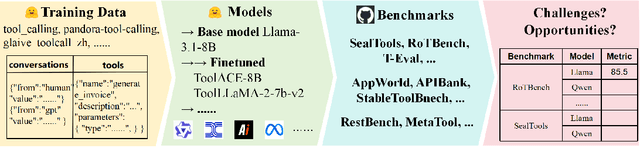
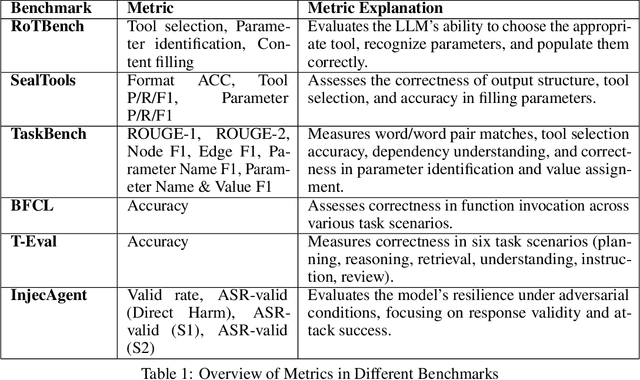
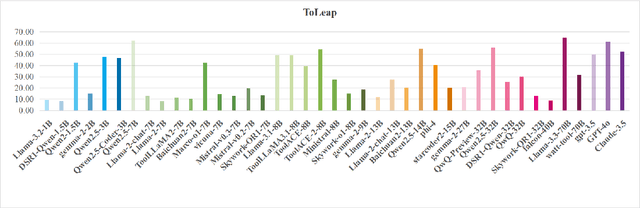
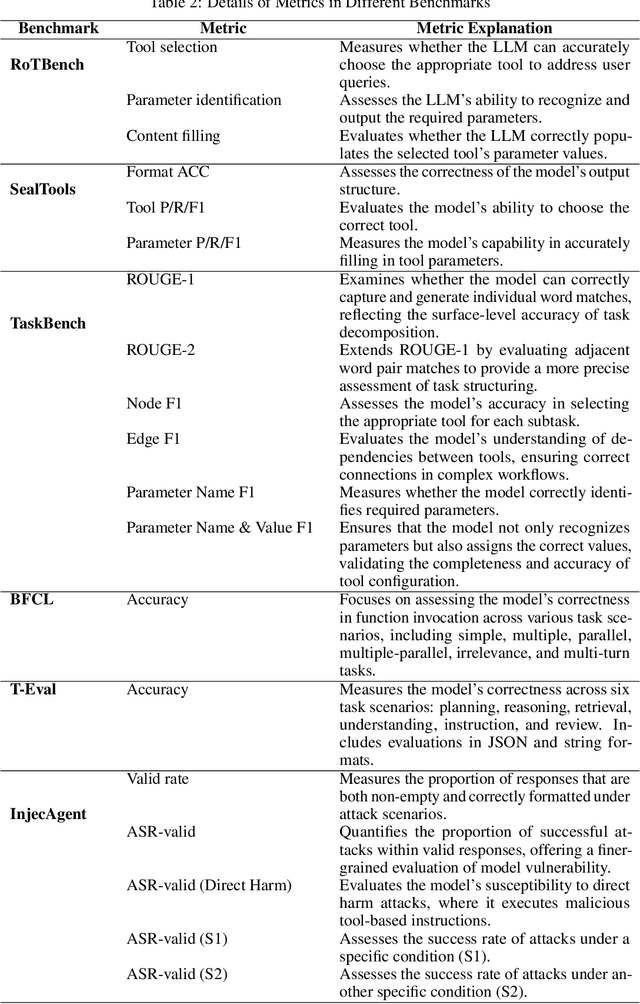
Tool learning, which enables large language models (LLMs) to utilize external tools effectively, has garnered increasing attention for its potential to revolutionize productivity across industries. Despite rapid development in tool learning, key challenges and opportunities remain understudied, limiting deeper insights and future advancements. In this paper, we investigate the tool learning ability of 41 prevalent LLMs by reproducing 33 benchmarks and enabling one-click evaluation for seven of them, forming a Tool Learning Platform named ToLeaP. We also collect 21 out of 33 potential training datasets to facilitate future exploration. After analyzing over 3,000 bad cases of 41 LLMs based on ToLeaP, we identify four main critical challenges: (1) benchmark limitations induce both the neglect and lack of (2) autonomous learning, (3) generalization, and (4) long-horizon task-solving capabilities of LLMs. To aid future advancements, we take a step further toward exploring potential directions, namely (1) real-world benchmark construction, (2) compatibility-aware autonomous learning, (3) rationale learning by thinking, and (4) identifying and recalling key clues. The preliminary experiments demonstrate their effectiveness, highlighting the need for further research and exploration.